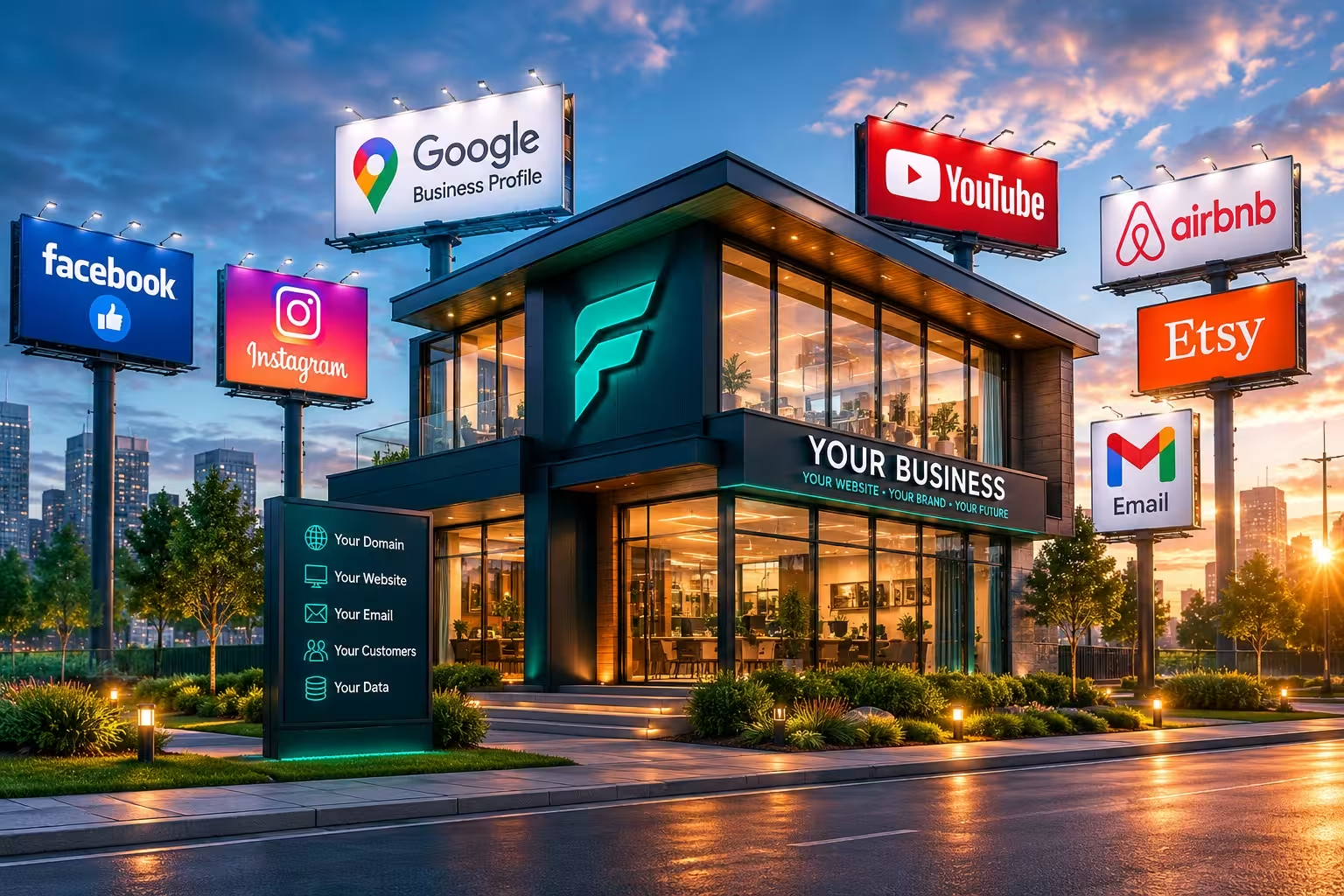
Many businesses operate almost entirely through Facebook, Instagram, Google Business Profiles, Airbnb, Etsy, or other third-party platforms.
These platforms can be excellent sources of customers. They help businesses get discovered, build credibility, and generate sales.
The problem is that none of them belong to you.
Your business may spend years building an audience on a platform that can change its rules, visibility, pricing, or policies at any time.
A website, on the other hand, is one of the few online assets your business can truly own.
The Difference Between Owning and Renting
Imagine opening a store inside a shopping mall.
The mall brings visitors and can help your business grow. But everyone understands that the building belongs to someone else.
If the mall changes its rules, increases fees, closes a section, or asks tenants to leave, there is very little you can do.
Many businesses unknowingly put themselves in the same situation online.
If your entire digital presence depends on:
- YouTube
- Airbnb
- Etsy
- Google Business Profile
- Online directories
then your business is effectively operating on rented land.
These platforms should be part of your strategy, but they should not be your entire strategy.
What You Should Own
Every business should aim to control a few critical digital assets.
At a minimum:
- Your domain name
- Your website
- Your business email addresses
- Your contact forms
- Your customer database
- Your content
These assets remain under your control regardless of what happens to any individual platform.
This does not mean abandoning social media.
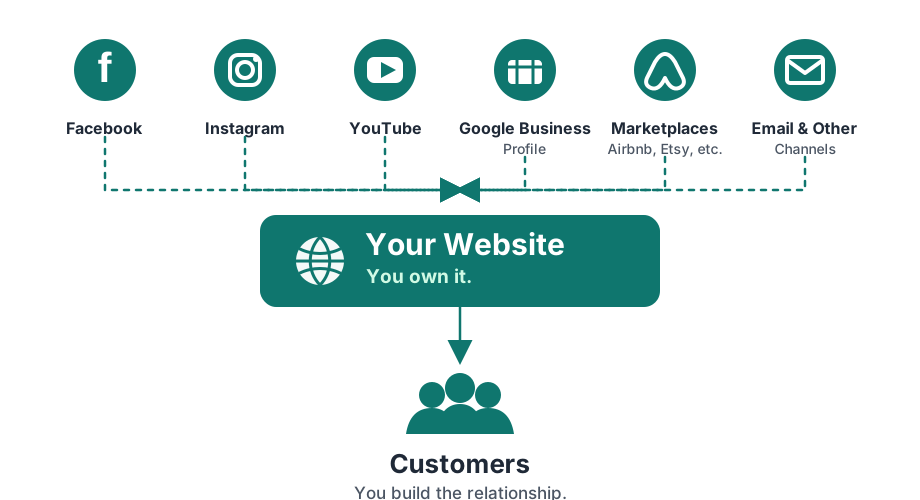
It means making sure social media directs people toward assets that belong to your business.
Your Website Is Your Digital Headquarters
Many business owners think of a website as a digital brochure.
A better way to think about it is as the headquarters of your online presence.
People may discover your business through:
- YouTube
- Directories
- Referrals
But eventually they should arrive somewhere that you control.
A website allows you to:
- Present your services professionally
- Capture leads through forms
- Publish content
- Track visitor activity
- Connect with CRM systems
- Build search engine visibility
- Communicate without depending on a third party
Most importantly, your website remains available even when external platforms change.
A Practical Example
Imagine a restaurant that relies entirely on Instagram.
For years, new customers find the business through posts and stories.
Then Instagram changes its algorithm.
Suddenly fewer people see those posts.
The restaurant has not done anything wrong, but its visibility drops immediately.
Now compare that to a restaurant that also owns:
- Its own website
- Its own domain
- An email newsletter
- A Google Business Profile
- Online menus hosted on its own website
The second business is far more resilient.
A change on one platform becomes an inconvenience instead of a crisis.
A Simple Rule
Use platforms.
Do not depend on platforms.
Platforms are excellent distribution channels.
Your website is the foundation.
The healthiest approach is usually:
- Own your domain
- Own your website
- Own your customer communication channels
- Use third-party platforms to drive traffic back to your own assets
That way, your business benefits from social media and marketplaces without becoming dependent on them.
Final Thoughts
A website is not just a marketing tool.
It is a business asset.
While social media profiles, marketplace listings, and platform algorithms may change over time, your website can continue serving your business for years.
The goal is not to avoid platforms.
The goal is to make sure your business can continue operating even if those platforms change tomorrow.